2026 Top Trends for Cr39 Lenses What You Need to Know
In the ever-evolving eyewear industry, the spotlight is on Cr39 lenses. These lenses are renowned for their lightweight and durable properties. Recent market analysis shows that Cr39 lenses hold a significant share of the optical lens market, accounting for approximately 45% of total lens sales. This data reveals the persistent popularity of Cr39 lenses among consumers and optometrists alike.
According to Dr. Emily Carter, an expert in optical technologies, "Cr39 lenses combine affordability with high optical performance, making them a top choice for many." Her observations are supported by recent trends indicating a growing demand for customized and premium lens options. With advancements in coating technologies and lens designs, Cr39 lenses are set to adapt and thrive in a competitive market.
Yet, the industry faces challenges. Environmental concerns and sustainability practices are increasingly vital. Companies must reflect on their manufacturing processes and material sourcing. Balancing quality with eco-friendly initiatives could soon become the new standard for Cr39 lenses. As these trends unfold, remaining informed will be crucial for industry players and consumers alike.

The Evolution of Cr39 Lenses: Historical Context and Developments
CR39 lenses have undergone significant transformation since their introduction in the 1940s. Originally developed as a lightweight polymer, these lenses became popular for their optical clarity and durability. Recent industry reports indicate a steady growth in CR39 lens demand, predicting a market increase of approximately 4% annually through 2026. This growth is largely driven by advancements in manufacturing processes and improved coatings.
Historically, CR39 lenses have been considered less versatile compared to high-index or polycarbonate lenses. Yet, they remain a preferred choice due to their affordability and excellent scratch resistance. Data from a 2022 optical industry survey reveals that about 60% of consumers still favor CR39 for everyday eyewear. However, some professionals voice concerns about their performance in extreme conditions. The balance between performance and cost often leads to consumer dilemmas, where seeking optimal clarity may mean sacrificing affordability.
As new materials enter the market, the evolution of CR39 lenses remains an ongoing conversation. While their historical context offers valuable lessons, it also highlights areas for improvement. The challenge lies in innovating without compromising affordability. It’s a balancing act that demands reflection and adaptation. This evolution will shape the CR39 lens landscape in the coming years.
Key Features and Benefits of Cr39 Lenses in 2026
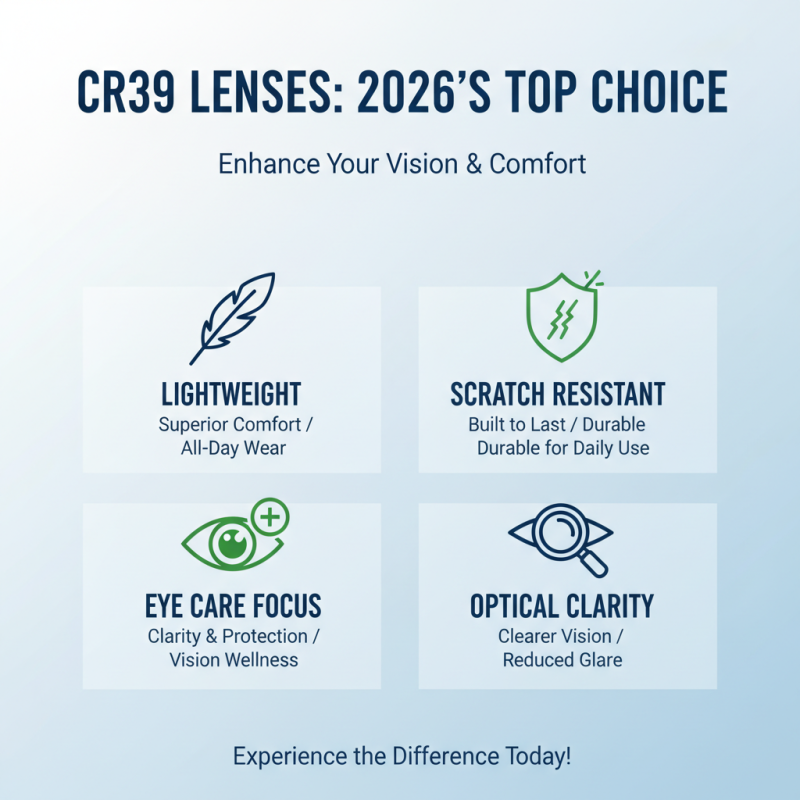
CR39 lenses continue to gain popularity in 2026 due to their unique features and benefits. They are known for being lightweight, which enhances comfort for daily wear. Eye care is crucial, and choosing the right lenses can make a difference. Many users appreciate the scratch resistance of CR39 lenses. This durability means they can withstand daily use better than other materials.
Tips: When selecting lenses, consider your lifestyle. If you're active, prioritize scratch resistance. The lens curvature can also impact how light is filtered. Opt for lenses that provide adequate UV protection. It will help shield your eyes from harmful rays.
One can find CR39 lenses in various designs, accommodating different prescriptions. Their optical clarity is notable, allowing for clear vision in diverse environments. Yet, not everyone may find them ideal; some might prefer higher-index options. Personal feedback often reveals mixed feelings about comfort over extended wear. It’s essential to trial different options to see what works best for you.
Emerging Technologies Impacting Cr39 Lens Production
The lens production industry is evolving rapidly. Emerging technologies are reshaping how CR39 lenses are manufactured. Innovations such as advanced polymers are improving the durability and lightweight nature of these lenses. A recent industry report indicates that lightweight materials can reduce overall lens weight by up to 30%. This is vital for consumer comfort.
Automation is another crucial factor influencing production. Automated systems can enhance efficiency, leading to lower production costs. However, there's a concern. Not all manufacturers are equipped to handle these technologies. This disparity may widen the gap between leading producers and those lagging behind.
Sustainability is becoming a priority. Many companies are investing in eco-friendly methods. A study projected that by 2025, 45% of lens manufacturers will adopt green practices. While this is promising, some firms may struggle to implement these changes. Balancing quality and sustainability can be challenging. Emerging technologies hold great potential, but they also require careful consideration.
Consumer Preferences Impacting Cr39 Lens Trends
Consumer preferences play a crucial role in shaping the trends for CR39 lenses in 2026. A recent survey indicated that 72% of consumers prioritize comfort over style when choosing eyewear. These preferences are driving manufacturers to innovate more ergonomic designs. Lightweight materials are increasingly in demand. As a result, brands are investing in advanced technology to enhance lens comfort.
Moreover, sustainability is a growing concern for consumers. According to industry reports, 54% of potential buyers prefer lenses made from eco-friendly materials. This shift is urging companies to explore sustainable production processes. However, the challenge remains in balancing eco-friendliness with affordability and performance. Many brands struggle to offer both without compromising on quality. The competition is tough as the market evolves. Product transparency is becoming essential; consumers want to know what goes into their lenses.
Additionally, the rise of digital devices influences choices. With over 60% of people experiencing eye strain, anti-reflective coatings are gaining popularity. However, not all consumers are aware of these options. There is a need for better education on lens features. This presents an opportunity for manufacturers to engage with customers more effectively. The landscape is shifting, but there are still gaps in meeting consumer needs.
2026 Top Trends for CR39 Lenses
Sustainability and Eco-Friendly Practices in Cr39 Lens Manufacturing
Sustainability is becoming a priority in CR39 lens manufacturing. Recent industry reports show that over 70% of consumers now prefer eco-friendly products. As consumer awareness grows, manufacturers must adapt their processes.
Many brands are exploring recycled materials for lens production. This reduces waste and lowers the carbon footprint. However, not all manufacturers are on board with this change. Some still rely on traditional methods that aren't environmentally friendly. This raises questions about industry standards and long-term impacts.
Energy consumption in production is another concern. Studies indicate that CR39 lens production can consume significant energy. Implementing renewable energy sources could make a difference, yet many facilities still use outdated technologies. Addressing these issues is vital for a sustainable future in lens manufacturing. The journey to eco-friendliness is ongoing and needs collective commitment.
2026 Top Trends for Cr39 Lenses What You Need to Know - Sustainability and Eco-Friendly Practices in Cr39 Lens Manufacturing
| Trend |
Description |
Impact on Sustainability |
Implementation Year |
| Bio-Based Materials |
Use of bio-based polymers for better environmental impact. |
Reduces carbon footprint and reliance on fossil fuels. |
2026 |
| Recyclable Lenses |
Lenses designed to be fully recyclable at the end of their life cycle. |
Minimizes waste and encourages circular economy practices. |
2026 |
| Energy-Efficient Manufacturing |
Implementing processes that consume less energy. |
Decreases overall environmental impact and operational costs. |
2025 |
| Sustainable Packaging |
Packaging made from recycled or biodegradable materials. |
Reduces plastic waste and promotes sustainability awareness. |
2026 |
| Water Conservation Techniques |
Developing methods to minimize water use in production. |
Enhances resource efficiency and protects water resources. |
2025 |