Best Prescription Lenses for Clear Vision in 2026?
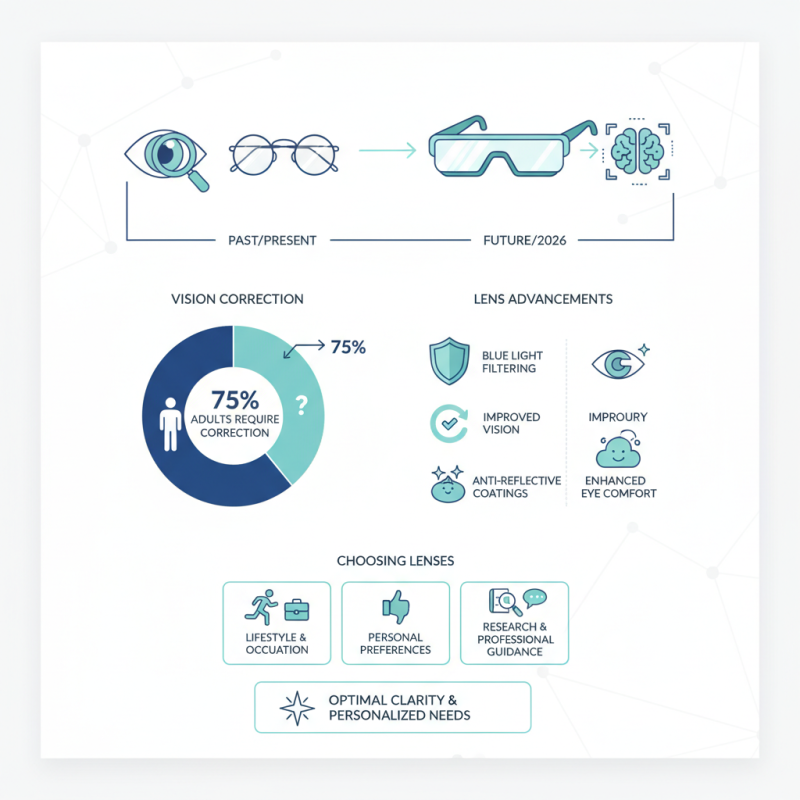
In 2026, the quest for clear vision continues to evolve. Prescription lenses play a crucial role in enhancing visual clarity and comfort. According to the Vision Council, over 75% of adults require some form of vision correction. This statistic underscores the importance of selecting high-quality prescription lenses for optimal clarity.
As Dr. Steven G. Bess, a leading expert in optical health, states, "The right prescription lenses can dramatically improve a person’s quality of life." With advancements in lens technology, such as blue light filtering and anti-reflective coatings, both vision and eye comfort can greatly improve. However, many consumers remain unaware of these innovations and their benefits.
Despite the technological advancements, many still face challenges in choosing the right lenses. There is no one-size-fits-all solution. Factors such as lifestyle, occupational needs, and personal preferences complicate the decision. Overcoming these obstacles requires thorough research and professional guidance to ensure that every individual finds the best prescription lenses tailored to their needs.
Overview of Prescription Lenses Available in 2026
In 2026, prescription lenses are evolving rapidly. Recent industry reports reveal that lightweight materials, especially high-index lenses, account for over 40% of the market. These lenses not only provide clear vision but also reduce visual fatigue. Comfort remains a key priority for users. Many people still struggle with discomfort from heavy lenses.
Moreover, digital eye strain is becoming a prevalent issue. A survey indicated that 70% of users experience symptoms related to prolonged screen time. This has led to an increased demand for blue light filtering lenses. Such lenses can help mitigate digital eye strain. However, awareness about these benefits remains limited. Many consumers overlook them, despite the clear advantages they offer.
Additionally, customized lenses are on the rise. Personalized prescriptions can address unique vision needs. Data shows that over 60% of wearers desire tailored visual solutions. Yet, some users feel overwhelmed by choices. The variety can create confusion and hesitation. More education is needed in this area. Users often need guidance to make informed decisions about their lens options.
Types of Prescription Lenses for Various Vision Needs
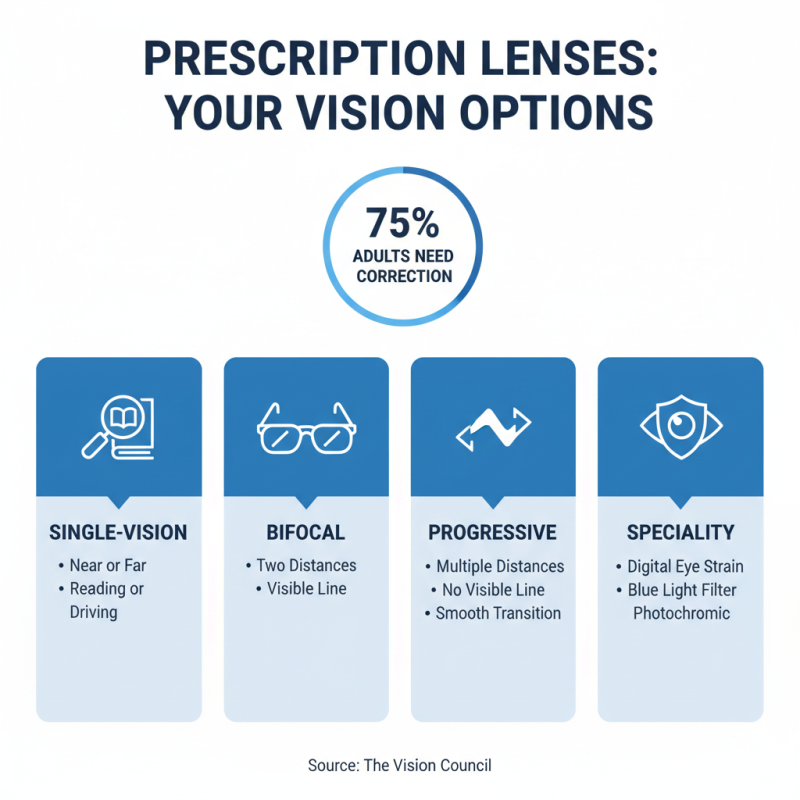
When considering prescription lenses, it's essential to understand the different types available for various vision needs. According to the Vision Council, nearly 75% of adults require some form of vision correction. This statistic highlights the importance of selecting suitable lenses, tailored to individual situations.
Single vision lenses are the most common choice. They address one refractive error, like nearsightedness or farsightedness. For those experiencing presbyopia, bifocal or progressive lenses might be necessary. Bifocals feature two distinct optical powers, while progressives provide smooth transitions between multiple prescriptions. Information from the American Optometric Association suggests that over 40% of people aged 40 and older experience presbyopia, emphasizing the need for these specialized lenses.
Additionally, lens materials and coatings play a critical role in enhancing vision. High-index lenses are thinner and lighter, suitable for stronger prescriptions. Anti-reflective coatings reduce glare, making night driving safer. However, this data-driven approach is not foolproof. Some users may find coatings wear off over time, requiring prompt replacements. Furthermore, not every lens type suits everyone's lifestyle. Users need to reflect on their daily activities and preferences to make informed choices.
Innovative Materials and Technologies in 2026 Prescription Lenses
In 2026, prescription lenses have undergone remarkable transformations. Innovative materials provide both clarity and comfort. Advanced polymers are thinner and lighter than previous options. These materials enhance durability while maintaining a stylish appearance. Scratch-resistant coatings are now more effective, ensuring lenses stay clear longer.
Technologies also play a crucial role in lens design. Digital wavefront technology tailors lenses to an individual’s vision needs. This customization results in sharper images and reduced glare. Adaptive lenses adjust to different lighting conditions, offering a seamless experience throughout the day. Eye strain is less common, but some users still report discomfort in specific environments.
Despite these advancements, challenges remain. Educating users about new technologies is essential. Not everyone understands the benefits of innovative lenses. Some may opt for traditional options out of habit. This hesitation can lead to missed opportunities for improved vision. Continuous awareness and education could bridge this gap.
Factors to Consider When Choosing Prescription Lenses
Choosing the right prescription lenses is crucial for clear vision. Several factors come into play when making this decision. First, the lens material is important. Options like polycarbonate and high-index lenses offer different benefits. Polycarbonate is lightweight and impact-resistant, while high-index lenses can be thinner and lighter, perfect for stronger prescriptions.
Another factor to consider is the lens coating. Anti-reflective coatings improve clarity, reducing glare from screens and lights. This is especially helpful for those who spend long hours in front of digital devices. However, these coatings can wear off over time, requiring periodic replacement or touch-ups, which can be overlooked.
Lastly, consider the lens type that suits your lifestyle. Single vision lenses are ideal for basic needs. Progressive lenses, however, cater for various distances without visible lines. While they provide convenience, adapting to them might take time for some users. Reflecting on your daily activities can guide you to the best choice.
Expert Recommendations for the Best Prescription Lenses in 2026
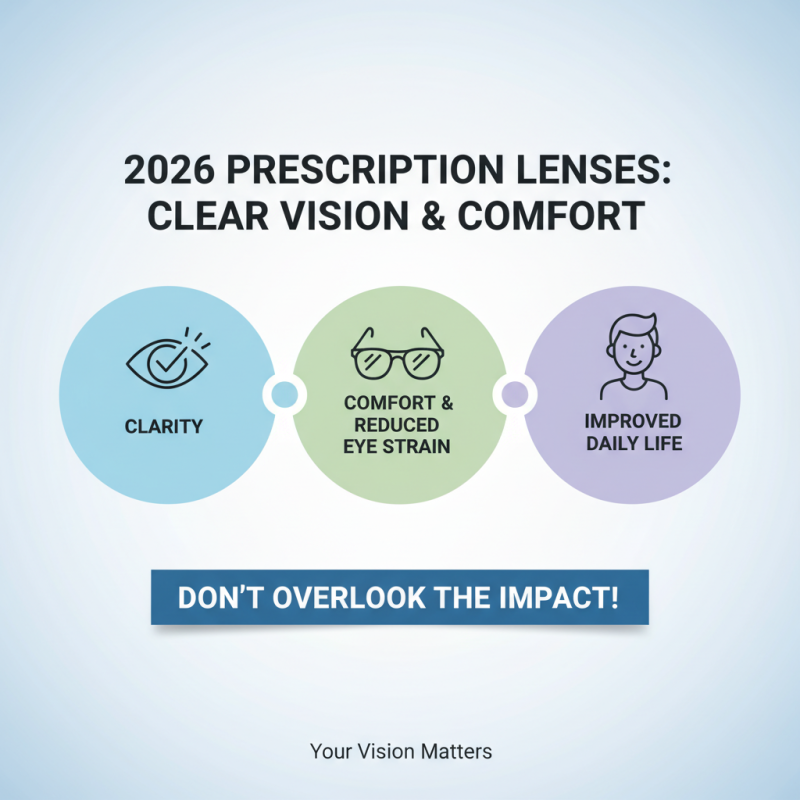
When choosing prescription lenses for clear vision in 2026, several factors should be considered. Comfort and clarity are essential. The right lenses can reduce eye strain. They can improve your overall visual experience. It’s easy to overlook how much lenses impact daily life. Many people suffer without realizing it.
Some lenses might not be suitable for every lifestyle. For example, outdoor enthusiasts may need different features compared to office workers. Coatings like anti-reflective and blue light filtering can enhance visual comfort. However, these options may also come with trade-offs. For instance, some coatings can wear off quickly. Proper care is crucial; maintenance should not be underestimated.
Remember, not all prescriptions are the same. An eye exam can uncover specific needs. Solutions should be personalized. While some enjoy the latest technology, others prefer simplicity. The best choice is the one that fits your unique situation. Seeking expert opinions can lead to better decisions. Always reflect on your habits and activities. Sometimes, clarity means adapting to change.