10 Best Transition Lenses for Ultimate Eye Comfort and Style?
Transition lenses have transformed the eyewear industry, blending comfort with style. According to a report by the Vision Council, over 30% of American adults utilize photochromic lenses, highlighting their growing popularity. These lenses adjust to changing light conditions, offering convenience and protection.
Dr. John Adams, a leading expert in optical science, once stated, "Transition lenses provide unparalleled versatility for those who frequently shift between environments." This statement reflects the increasing demand for eyewear that caters to active lifestyles.
However, not all transition lenses perform equally. Certain brands may struggle with speed and clarity, which can leave wearers frustrated. Consumers should consider various factors: lens material, UV protection, and responsiveness to light. This reflective approach ensures careful selection of the best transition lenses for eye comfort and fashion.
The Science Behind Transition Lenses: How They Work for Your Eyes
Transition lenses offer remarkable advantages for eye comfort. These lenses change their tint based on UV light exposure, providing a practical solution for outdoor settings. According to a study by the Vision Council, about 27% of adults experience discomfort from bright sunlight. Transition lenses help mitigate glare and reduce eye strain.
The science behind these lenses is fascinating. Designed with photochromic technology, they contain molecules that react to UV rays. When exposed to sunlight, these molecules darken. This feature allows for greater comfort during various lighting conditions. Data from the American Optometric Association indicates that prolonged UV exposure can lead to potential eye health issues, including cataracts. Transition lenses serve as a protective barrier against such risks.
However, some users may find issues with slow activation and fading. Conditions like temperature and humidity can affect their performance. A report from the Optical Laboratory Association highlighted that approximately 15% of users reported dissatisfaction with transition speed in some environments. Reflecting on these factors leads to a better understanding of how transition lenses can be optimized for everyone’s needs.
Top Features to Look for in Transition Lenses for Maximum Comfort
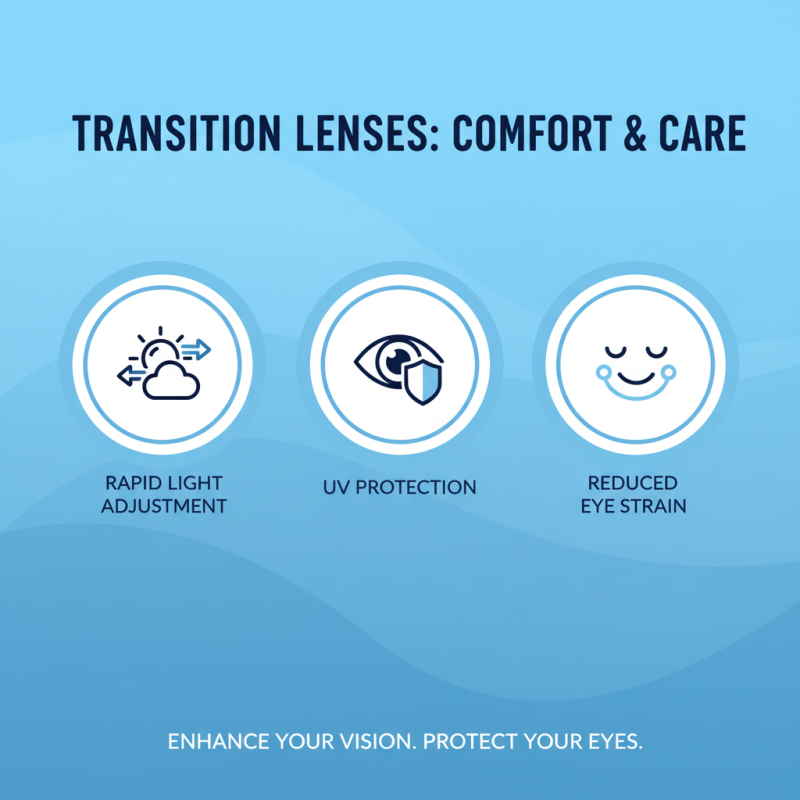
When choosing transition lenses, comfort is key. Look for lenses that adjust quickly to changing light. This feature allows your eyes to feel relaxed both indoors and outdoors. A good pair should also provide UV protection. This shields your eyes from harmful rays, reducing strain and fatigue.
Lens material plays a crucial role. Lightweight materials make a big difference. Heavy lenses can lead to discomfort, especially after long use. It's also important to consider the lens tint. Some colors enhance contrast while reducing glare. However, personal preference matters too. Choose a tint that resonates with your style.
Don't overlook the coating options. Anti-scratch coatings help maintain clarity. Smudge-resistant options make cleaning easier. Yet, not all coatings are durable. They may fade over time, requiring a replacement. Remember, not every pair will be perfect for everyone. Experimentation is part of finding the ideal fit.
Comparative Analysis of Leading Brands in Transition Lens Technology
When it comes to choosing transition lenses, various brands offer unique features. These lenses react to UV light, darkening in sunlight and clearing indoors. This technology promises convenience and comfort. However, not all transition lenses perform the same way. Some may darken slower, while others may not provide enough clarity indoors.
Comfort is crucial. Many users find that certain lenses can cause eye strain, particularly under bright conditions. Lenses with a faster transition time and wider range of tint options tend to perform better. It's also important to consider lens coatings. Anti-reflective coatings can enhance clarity but may wear over time.
Style matters too. While functionality is key, aesthetic appeal cannot be overlooked. Some lenses may clash with specific frame designs. Trying different shapes and colors can lead to unexpected results. Users often realize that personal preference greatly influences their final choice.
User Experience: Real-Life Reviews on Transition Lens Performance
Transition lenses have become popular for their ability to adapt to changing light conditions. This adaptability is essential for users who often find themselves moving between indoor and outdoor environments.
According to a report by the Vision Council, 48% of lens wearers prefer photochromic lenses for their convenience and comfort. However, many users express a need for faster transition times when moving from bright sunlight to darker spaces.
In real-life reviews, users have shared mixed experiences. Some appreciate the gradual change and UV protection offered, while others find the performance lacking during quick light shifts. A survey by the American Optometric Association highlights that nearly
60% of users wished for clearer vision in all lighting scenarios. These insights reveal that while transitional lenses improve eye comfort, they may not fulfill all user expectations.
Moreover, aesthetic appeal plays a significant role in selection. Many seek stylish frames that complement their eyeglasses. But fit and comfort often end up being overlooked. This oversight can lead to dissatisfaction over time. Transition lenses indeed promise convenience, yet the balance between comfort, style, and performance remains a challenge for many users.
Trends in Transition Lenses: Style Options That Enhance Your Look
Transition lenses have gained immense popularity, blending style with functionality. According to a recent industry report, about 35% of eyewear users prefer these adaptive lenses. They seamlessly adjust to changing light conditions. This versatility is appealing for many lifestyles.
Style options continue to evolve, offering a range of frame shapes, colors, and lens finishes. Users can select bold, colorful frames or subtle, professional designs. Statistics show that nearly 65% of consumers consider style a crucial factor when choosing eyewear. The choices available today enable individuals to express their personality while prioritizing eye comfort.
Fashion is not solely about aesthetics. It's also about finding the right fit and functionality. Some people struggle to find transition lenses that complement their facial features. This mismatch can be frustrating. It’s essential to try different styles to capture the perfect look. Understanding the balance between comfort and style will enhance the eyewear experience.
10 Best Transition Lenses for Ultimate Eye Comfort and Style
| Lens Type |
Photochromic Feature |
UV Protection |
Lens Style |
Price Range |
| Standard Transition |
Moderate |
100% UVA/UVB |
Round, Rectangle |
$150 - $300 |
| Extra Dark Transition |
High |
100% UVA/UVB |
Wrap-Around, Sports |
$200 - $350 |
| Polarized Transition |
Moderate |
100% UVA/UVB |
Square, Oval |
$180 - $320 |
| Transition for Prescription Lenses |
High |
100% UVA/UVB |
Various |
$250 - $400 |
| Thin & Light Transition |
Moderate |
100% UVA/UVB |
Slim, Lightweight |
$220 - $370 |
| Fashion Tints Transition |
High |
100% UVA/UVB |
Fashionable Colors |
$200 - $340 |
| Kids Transition Lenses |
Moderate |
100% UVA/UVB |
Youth Styles |
$120 - $250 |
| Photochromic Driving Lenses |
Very High |
100% UVA/UVB |
Specialized Driving Styles |
$250 - $400 |
| Sunglass Transition Lenses |
High |
100% UVA/UVB |
Various Sunglass Styles |
$230 - $390 |
| High Index Transition Lenses |
High |
100% UVA/UVB |
Thin and Lightweight |
$280 - $450 |