2026 How to Choose the Best Multi Coated Lens for Your Photography Needs?
Choosing the right Multi Coated Lens can significantly impact your photography. With various options available, it's essential to understand your personal needs. Multi Coated Lenses are designed to reduce glare, enhance contrast, and provide sharper images.
When selecting a lens, consider your shooting style. Are you a landscape photographer, or do you prefer close-up shots? A suitable Multi Coated Lens will enhance your specific photography goals. Pay attention to factors like the lens's coatings, which determine how well it handles light.
While it might seem overwhelming, take your time to research and compare different lenses. Don't be afraid to seek expert opinions. Reflect on your experiences with various lenses; not all will meet your expectations. Analyze the results and learn what works best for you. Ultimately, the right Multi Coated Lens can unlock your creative potential in photography.
Understanding Multi Coated Lenses: An Overview of Key Features
Multi-coated lenses are essential for modern photography. They effectively reduce reflections and increase light transmission. This means you get clearer images with better color accuracy. Understanding multi-coating is crucial when selecting the right lens.
One key feature to consider is the number of coatings. Multi-coated lenses often feature several layers, enhancing performance. Look for antireflective coatings, which help in bright conditions. These coatings prevent lens flare and ghosting, common issues in photography. However, more coatings do not always equal better quality. Sometimes, cheaper lenses can produce images that rival their expensive counterparts.
The material of the glass also plays a vital role. High-quality glass ensures less distortion and sharper images. Yet, it can be heavier and more fragile. Balancing weight and durability is a personal decision. Choosing a lens is subjective and should align with your style. Reflect on your needs and how you use your gear. Always test lenses when possible.
The Importance of Lens Coating: Reducing Flare and Ghosting Effects
Choosing the right multi-coated lens is crucial for any photographer. Lens coatings significantly reduce unwanted flare and ghosting effects, enhancing image clarity. Studies show that a good coating can improve light transmission by up to 99.5%. This means better contrast and more vibrant colors in your photos.
Flare occurs when strong light hits the lens surface. It creates unwanted artifacts in images. Ghosting, on the other hand, produces multiple reflections that diminish image quality. High-quality lens coatings can mitigate these issues by minimizing reflections on the front and rear elements. Not all coatings are created equal; some provide stronger protection against these effects.
Most photographers report noticeable improvements after switching to multi-coated lenses. However, not every lens will perform optimally in every situation. Environmental factors also play a role. For instance, shooting in harsh sunlight can still lead to some flare, even with top-grade coatings. Understanding these limitations will help you make better choices when selecting lenses for your photography toolkit.
2026 How to Choose the Best Multi Coated Lens for Your Photography Needs?
| Lens Type |
Coating Type |
Flare Reduction |
Ghosting Reduction |
Best Use |
| Standard Zoom |
Multi-Coated |
High |
Moderate |
General Photography |
| Wide Angle |
Ultra Multi-Coated |
Very High |
High |
Landscape Photography |
| Telephoto |
FMC (Fully Multi-Coated) |
High |
Very High |
Wildlife Photography |
| Macro |
Coated |
Moderate |
Moderate |
Close-Up Photography |
Types of Multi Coatings: Exploring Anti-Reflective, UV, and Protection Layers
When selecting the best multi-coated lens, understanding the types of coatings is essential. Anti-reflective coatings reduce unwanted reflections. This enhances light transmission, resulting in clearer images. They are particularly useful in low-light situations. Photographers notice a difference in contrast and color accuracy. Yet, not all anti-reflective coatings are equal. Some may wear off quickly, leading to discoloration.
UV coatings block harmful ultraviolet light. This protects against haziness in outdoor shots. While UV filters are often debated, their protective qualities are undeniable. A lens with a good UV coating can shield against scratches. However, over time, these coatings may degrade or become less effective, leading to an unexpected need for replacement.
Protection layers are another vital aspect to consider. They guard your lens from dirt and moisture. These protective surfaces help maintain image quality over time. Yet, even the best protection can fail without proper care. Regular cleaning and maintenance are necessary to ensure longevity. In choosing a lens, factor in these coatings and their implications on your photographic journey. Each type presents unique benefits and potential drawbacks, guiding your decision.
Evaluating Lens Quality: Key Specifications and Professional Recommendations
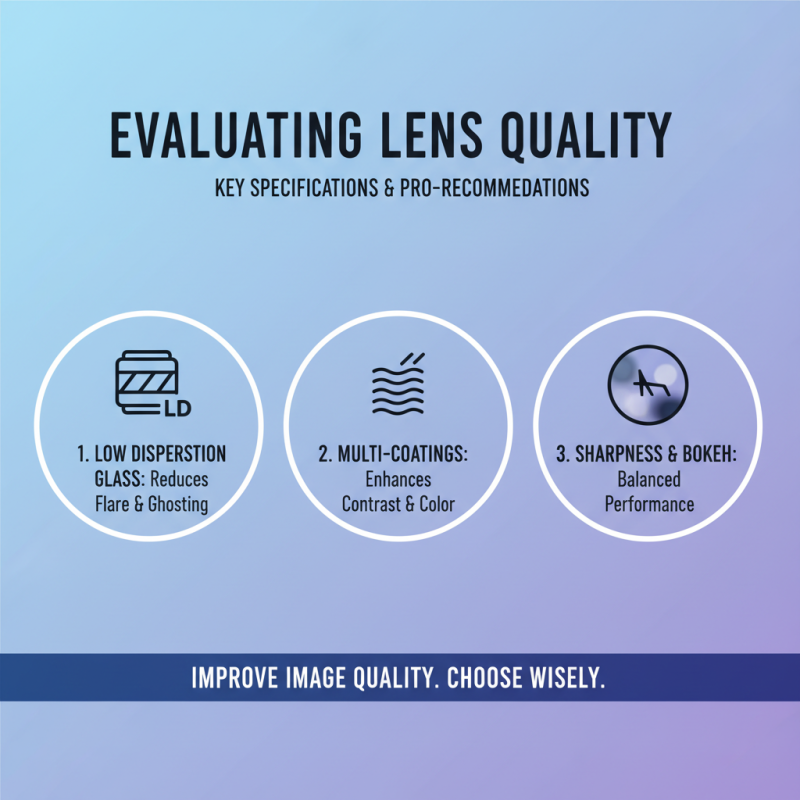
When selecting a multi-coated lens, consider crucial specifications that impact image quality. Look for low dispersion glass and multiple coatings to minimize flare and ghosting. These features enhance contrast and ensure vibrant colors. A good lens should have a good balance between sharpness and bokeh, catering to different photographic needs.
Tip: Pay attention to aperture size. A wider aperture allows more light, which is beneficial in low-light scenarios. However, too wide can lead to a shallow depth of field. It’s a trade-off that depends on your subjects and style.
Not all lenses are perfect. Some may have chromatic aberrations, especially at the edges. Testing lenses in various lighting conditions can reveal these flaws. Scrutinizing lens reviews from professionals can help, but remember that personal experience is invaluable. Learning from each photo will enhance your skills over time.