How to Choose High Index Lenses for Your Glasses?
When selecting glasses, many overlook the importance of High Index Lenses. Dr. Emily Carter, an optometry expert, says, “Choosing the right lenses can transform your vision experience.” This highlights the necessity of understanding your options. High Index Lenses offer a thinner and lighter alternative for those with stronger prescriptions, making them a popular choice.
However, the decision isn't always straightforward. Not all High Index Lenses are created equal. Factors such as lens material, coatings, and curvature can affect both comfort and clarity. It's essential to consult with an eye care professional. This ensures your lenses fit your lifestyle and vision needs.
Moreover, there are some common misconceptions. Many believe thinner lenses always provide better vision quality. This isn't always true. Reflect on personal needs before making a choice. Ensure that you fully understand how High Index Lenses will work for you. Making decisions about eye care requires careful consideration.

Understanding High Index Lenses: What Are They and How They Work
High index lenses are designed for those with stronger prescriptions. These lenses bend light more effectively than traditional ones. This means they can be thinner and lighter, improving comfort and style. A recent report from the Optical Research Foundation states that high index lenses can reduce lens thickness by up to 50% for strong prescriptions.
Understanding your prescription is essential when opting for high index lenses. The index of refraction ranges from 1.50 to 1.74. Lenses with a higher index index create a flatter surface. This creates a better aesthetic appeal, especially for those with stronger prescriptions. For instance, a -6.00 prescription using a 1.74 high index lens can be significantly thinner than the same prescription in a 1.50 lens.
However, high index lenses can have some downsides. They may display more reflections, causing glare. Additionally, they can sometimes amplify certain visual distortions. Users must weigh these factors against the benefits of weight and thickness reduction. While high index lenses offer comfort, they might not be suitable for everyone. Individual visual needs and preferences vary widely in the optical market.
How to Choose High Index Lenses for Your Glasses?
This chart represents the average thickness of various lens indices relative to their prescription strength. Choosing the right high index lens can significantly affect the weight and aesthetics of your glasses.
Key Benefits of High Index Lenses for Different Prescription Types
High index lenses are a fantastic option for many people. They are thinner and lighter than regular lenses. This quality makes them a popular choice, especially for strong prescriptions. High index lenses reduce the extra bulk that can be uncomfortable. This is particularly beneficial for those with high myopia or hyperopia. The sleek, minimalist design complements various frames well.
Different prescriptions have unique needs. For instance, someone with astigmatism may benefit from the enhanced visual clarity high index lenses provide. They often experience distortions with traditional lenses. High index options help to minimize these issues. Additionally, individuals who wear glasses all day can enjoy increased comfort. The lighter weight reduces pressure on the nose and ears. However, high index lenses are not for everyone. They may come with a higher price tag.
Choosing the right lens is crucial. Consider your lifestyle and frame choices. How often do you wear glasses? Is your prescription strong? Sometimes, it’s worth consulting an eye care professional. They can guide you through the benefits and potential downsides. The decision should align with your vision needs and daily preferences.
How to Choose High Index Lenses for Your Glasses? - Key Benefits of High Index Lenses for Different Prescription Types
| Prescription Type |
Lens Index |
Lens Thickness (mm) |
Weight (g) |
UV Protection |
Anti-Reflective Coating |
| Mild Prescription (-2.00 to -3.00) |
1.56 |
3.0 |
14.0 |
Yes |
Yes |
| Moderate Prescription (-3.25 to -6.00) |
1.61 |
3.2 |
12.5 |
Yes |
Yes |
| High Prescription (-6.25 to -10.00) |
1.67 |
3.5 |
12.0 |
Yes |
Yes |
| Very High Prescription (>-10.00) |
1.74 |
4.0 |
11.5 |
Yes |
Yes |
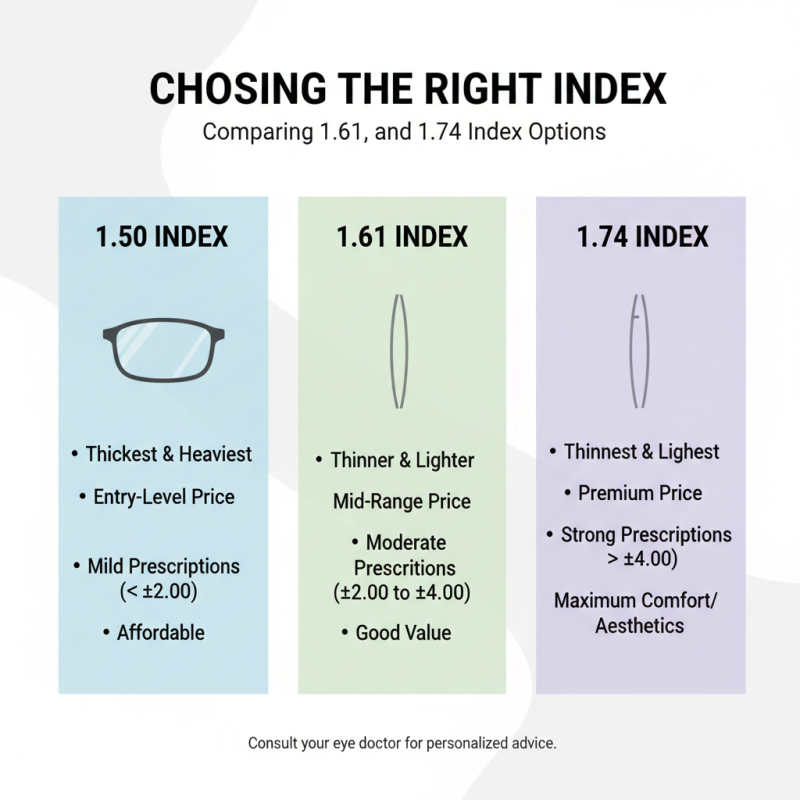
Choosing the Right Index: Comparing 1.50, 1.61, and 1.74 Index Options
When it comes to selecting high index lenses, the index value plays a crucial role in lens thickness and weight. The 1.50 index is the entry-level option. It is thicker and heavier than higher-index lenses, which can be uncomfortable for many users. However, this option remains popular due to its affordability. It works well for mild prescriptions, typically under -2.00 or +2.00 diopters.
The 1.61 and 1.74 index lenses are game-changers. The 1.61 index is slimmer and lighter, making it ideal for moderate prescriptions. A report from the Vision Council indicates that the 1.61 index is preferred by about 30% of consumers with mid-range prescriptions. In contrast, the 1.74 index offers superior thinness, suitable for high prescriptions. It reduces lens bulk significantly, often by up to 50%. This index can greatly enhance comfort, especially for strong prescriptions.
Choosing the right index means weighing pros and cons. While higher-index lenses provide comfort, they also come at a premium price. Many users may feel apprehensive about the cost variation. Understanding your specific needs and prescription strength can help. Often, people overlook the importance of weight and thickness in daily wear. It’s essential to prioritize comfort and practicality.
Factors Influencing the Cost of High Index Lenses and Insurance Coverage
When considering high index lenses, it's important to think about their cost. These lenses can be more expensive due to their advanced technology. The manufacturing process is complex, resulting in higher prices.
Additionally, insurance coverage varies significantly. Some plans may cover these lenses, while others do not. Always check with your provider to understand your benefits. Sometimes, you might find yourself paying out of pocket. This can be frustrating, especially if you expect coverage.
Moreover, the material and index level influence the price. Higher index numbers often mean thinner lenses but at a premium cost. It's a trade-off that requires careful thought. Reflect on your vision needs and budget. Is the investment truly worth it for you? Make sure to balance personal preferences with financial realities.
Important Lens Coatings and Treatments for High Index Lenses Choices
When selecting high index lenses, lens coatings and treatments play a crucial role. Anti-reflective (AR) coating is one of the most important features. It reduces glare, improving clarity. This can be particularly beneficial for night driving or working on screens.
Scratch-resistant coatings are another essential consideration. High index lenses can be more prone to scratches if not treated properly. A durable, scratch-resistant surface can help maintain clarity over time. Moreover, UV protection is vital. It shields your eyes from harmful rays, ensuring long-term eye health.
Don't overlook the importance of blue light filtering. This treatment helps reduce eye strain caused by prolonged screen time. However, the balance between image quality and protection should be considered. Sometimes, excessive filtering can distort colors. Reflect on your daily activities to choose the treatments that best suit your lifestyle.