How to Choose the Best Aspherical Lenses for Your Needs?
Choosing the right aspherical lenses is essential for achieving optimal visual performance. Expert Dr. Emily Thompson, a leading authority in optical engineering, emphasizes, “The right lens shape can significantly enhance image quality.” Her insight reflects the intricate balance between design and utility in lenses.
Aspherical lenses offer distinct advantages over traditional spherical lenses. They are designed to minimize optical aberrations, providing sharper and clearer images. This design innovation is crucial for applications ranging from photography to eyeglasses. However, selecting the best aspherical lens can be challenging.
Factors such as coating quality, material, and curvature play a vital role. It’s important to consider your specific needs and preferences. Whether for professional use or personal enjoyment, understanding these elements can aid in making an informed decision. The world of aspherical lenses requires careful thought and attention to detail.
Understanding Aspherical Lenses and Their Benefits
Aspherical lenses offer clear advantages over traditional spherical lenses. These lenses feature a non-uniform surface curvature, which effectively reduces optical aberrations. This means sharper images and better light distribution, making them ideal for photography and optical instruments. Users often notice a significant difference in image quality right away.
Choosing the right aspherical lens involves understanding your specific needs. Consider factors like focal length and intended use. For instance, a photographer might prioritize low distortion for landscapes, while an eye care professional may focus on comfort for daily wear lenses. Reflecting on personal experiences with lens types can guide your choice. It's not just about the specs; comfort and usability matter too.
Many people overlook the importance of lens coatings. Anti-reflective and scratch-resistant coatings can add to the lens's effectiveness. However, be aware that these extras can also drive up the cost. Weighing the benefits against your budget is essential. Not all aspherical lenses will meet every need, so be prepared for a bit of trial and error in finding the perfect match.
How to Choose the Best Aspherical Lenses for Your Needs?
| Aspect |
Description |
Benefits |
| Field of View |
Aspherical lenses offer a wider field of view compared to traditional lenses. |
Improved vision at the periphery, reducing the need to move the head. |
| Distortion |
Aspherical lenses minimize distortion for clearer images. |
Enhanced image quality, particularly in high-strength prescriptions. |
| Thickness |
They are thinner than traditional lenses, especially in high prescriptions. |
Lighter glasses that are more comfortable to wear. |
| Weight |
Aspherical lenses can be made from lighter materials. |
Reduced strain on the nose and ears while wearing glasses. |
| Aesthetics |
They provide a slimmer profile, improving the overall aesthetic of the glasses. |
More attractive appearance, especially for strong prescriptions. |
Identifying Your Optical Needs and Applications
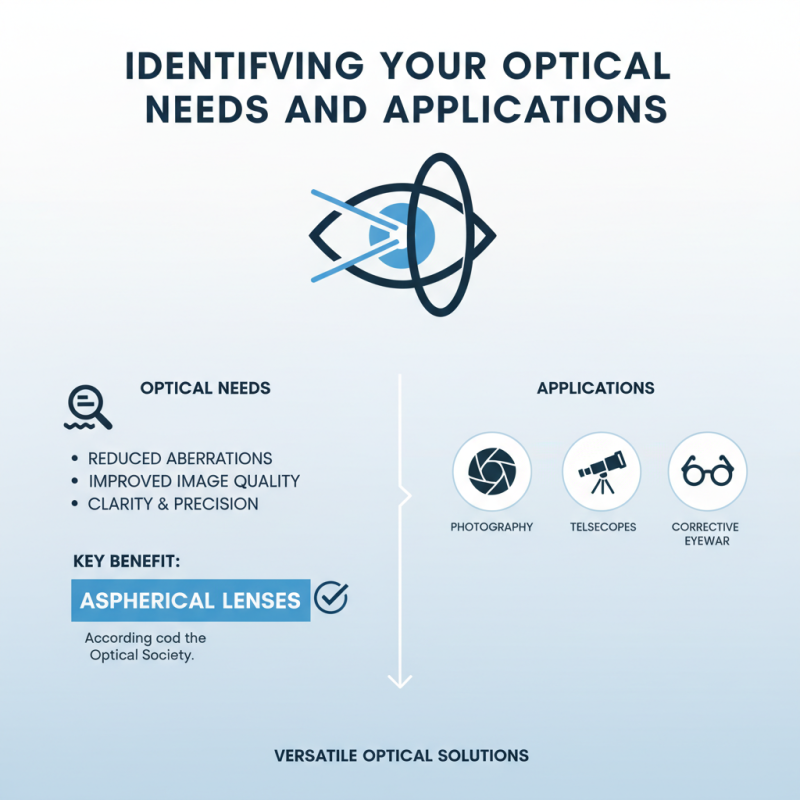
When selecting aspherical lenses, understanding your optical needs is crucial. The applications of these lenses vary widely. According to the Optical Society, aspherical lenses reduce optical aberrations significantly. This improvement enhances image quality, making them ideal for photography, telescopes, and corrective eyewear.
Consider the specifics of your requirements. If photographing landscapes, wide-angle aspherical lenses may suit you. For microscopy, specialized lenses are essential. A study by the International Optics Association indicates that 70% of optical professionals prefer aspherical lenses for their versatility and performance. This indicates a growing trend; a reflection of their importance in different fields.
Evaluate your environment and usage patterns. Lighting conditions can influence lens effectiveness. For instance, glare may impact outdoor photography, requiring anti-reflective coatings. There’s no one-size-fits-all lens. It’s about finding what fits best for your unique situation. This personalized approach to selecting lenses is a challenge worth considering.
Evaluating Material Options for Aspherical Lenses
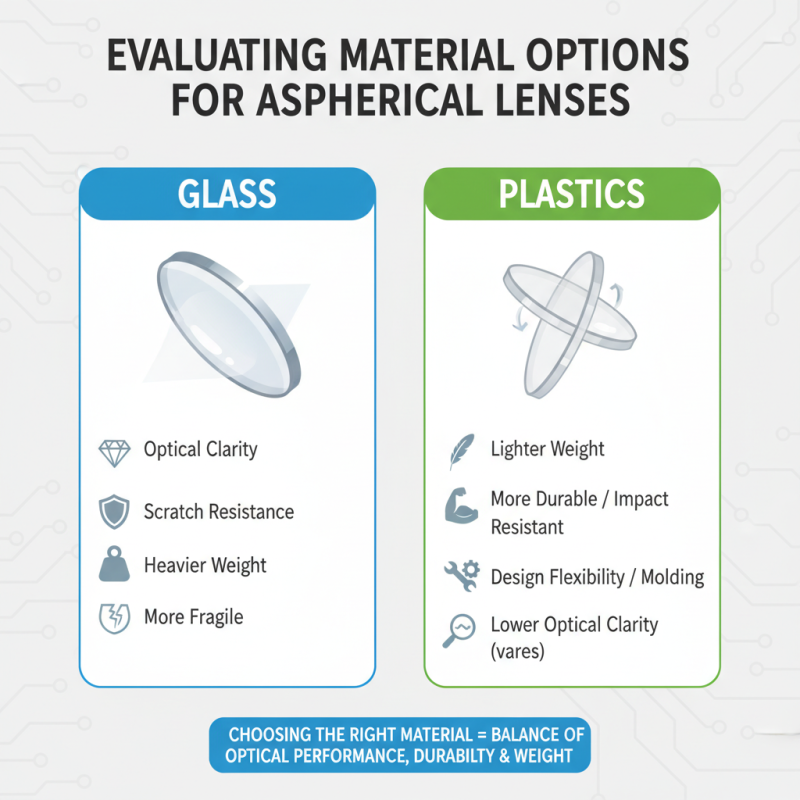
Choosing the right material for aspherical lenses involves a careful evaluation of several factors. Typically, you will find options like glass and various plastics. Glass is known for its optical clarity and scratch resistance. However, it can be heavier and more fragile than plastic alternatives. This may pose challenges for certain applications requiring durability.
In contrast, high-index plastics are lighter and often more impact-resistant. They can offer good optical quality, but their susceptibility to scratching can be a downside. Some may find the quality of image produced by plastic lenses to be less satisfactory compared to glass. Understanding the application of the lens is crucial in this decision-making process.
Reflect on your needs. Consider the environment where the lenses will be used. If weight is a major concern, plastic might suit better. On the other hand, if clarity and durability are prioritized, glass could be worth the extra weight. Each material comes with its trade-offs. Make informed choices based on a realistic assessment of your requirements.
Comparing Lens Coatings and Features
Choosing the right aspherical lenses involves understanding their coatings and features. Lens coatings play a critical role in enhancing performance. Anti-reflective coatings reduce glare and improve light transmission. This can lead to sharper images and a better viewing experience.
Consider the durability of the coatings. Some may scratch or wear off over time, affecting clarity. Look for lenses that offer protective coatings against moisture and dirt. This will keep your lenses cleaner for longer periods.
Tips: Always check for multi-coatings. These can significantly enhance lens performance. Test out different lenses in various lighting conditions. Observe how each performs. Don't overlook personal comfort and fit when making your choice. Prioritize quality over brand reputation. Small mistakes can lead to discomfort later.
Comparison of Lens Features and Coatings
Considering Budget and Brand Reputation
When selecting aspherical lenses, budget and brand reputation are critical. A tight budget often limits options, yet there are still ways to find good lenses. It's essential to evaluate the performance against the price. Budget lenses can offer decent quality, but they may compromise on coatings or durability. Have a clear idea of what characteristics matter most.
Brand reputation plays a significant role in the decision-making process. Established brands often have rigorous quality control. They may provide more reliable performance and better customer service. However, newer brands can surprise you with innovative designs. Research user reviews and expert opinions to gauge reliability. Look for feedback on durability and clarity; these factors can impact your experience significantly.
It’s crucial to reflect on your specific needs. Are you using these lenses for professional photography or casual use? Sometimes, spending a bit more on a reliable brand pays off. Other times, budget-friendly options suffices. Balancing cost and quality is not always straightforward. Make informed choices based on credible sources and user experiences. Prioritize what you need over what is trendy.