How to Choose the Right Optical Lenses for Your Needs?
Choosing the right optical lenses can be overwhelming. The market offers numerous options tailored to various vision needs. According to a report by Grand View Research, the global optical lens market is projected to reach $15 billion by 2025. This growth highlights the increasing demand for personalized lens solutions.
Your choice should reflect your vision requirements and lifestyle. Whether for daily wear or specific activities, identify the lens type that suits you best. Factors like prescription needs, material, and lens coating play essential roles. Research shows that over 50% of lens wearers seek lenses that provide both comfort and clarity, indicating a shift towards premium options.
However, navigating these choices is not always easy. Many buyers have experienced regret after selecting the wrong lens type. Understanding your vision needs and consulting professionals can help prevent these mistakes. Optical lenses can be a significant investment; making an informed choice is crucial to achieving optimal vision and satisfaction.

Understanding Different Types of Optical Lenses
When choosing optical lenses, understanding the different types is crucial. Some common types include single vision, bifocal, and progressive lenses.
Single vision lenses correct one field of vision. They suit those who need help with distance or reading. Bifocal lenses provide two distinct areas for viewing. However, they can feel jarring for new users. Progressive lenses blend prescriptions seamlessly into one lens. This offers a more natural vision experience.
Here are some tips to consider when selecting lenses. Assess your lifestyle needs. Do you spend hours on the computer? You might need lenses designed for digital screen use. Remember that not all lenses are comfortable for everyone. It’s common for wearers to experience discomfort initially. Take note of any issues you face. This feedback is essential.
Another tip is to consult with a professional. They can provide insight tailored to your vision and lifestyle. Be open about your habits and challenges. Sometimes, the perfect lens might need time to acclimate. Reflect on how your lenses feel day by day. Adjustments might be necessary.
Assessing Your Vision Needs and Lifestyle Factors
Choosing the right optical lenses begins with assessing your vision needs. Consider your daily activities. Do you read a lot? Or do you spend hours in front of screens? Each situation demands different solutions. Reading lenses help with close work, while anti-reflective coatings reduce glare from digital devices.
Lifestyle factors also play a critical role. Active individuals might require more durable lenses. If you enjoy sports, you may prefer impact-resistant options. Social settings might lead you to consider lenses that enhance vision in varying light. It’s not just about clarity; it's about comfort too.
Reflect on your habits. Do you frequently switch between environments? If so, versatile lenses could be ideal. Remember that some lenses may not meet all your expectations. Prioritize which features matter most to you. It’s okay to feel overwhelmed; many share this struggle. The right choice often comes from trial and thoughtful consideration of your unique lifestyle.
Evaluating Lens Materials and Their Properties
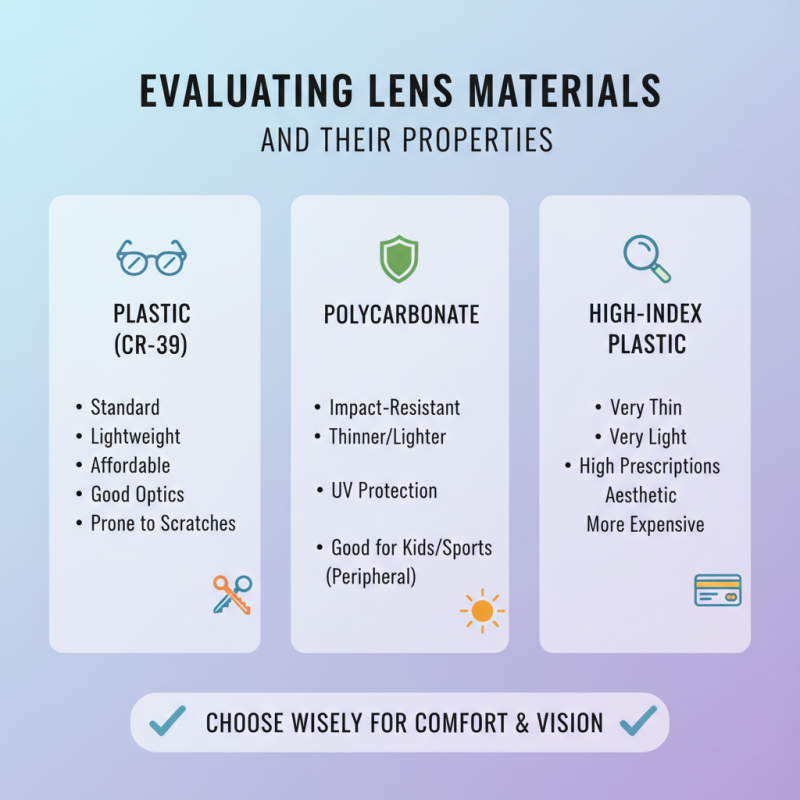
Choosing the right optical lenses is crucial for a comfortable experience. Evaluating the lens materials can guide you in making the best choice. Various materials have unique properties that affect your vision and comfort.
Polycarbonate is lightweight and impact-resistant. It's ideal for children and active individuals. However, it may scratch easily. Try using a protective coating to enhance durability. Glass lenses provide excellent optical clarity but are heavier. They can break more easily, so careful handling is essential.
Tips: Consider your lifestyle. If you engage in sports, polycarbonate might suit you. For everyday wear, glass lenses can offer clarity. Also, explore high-index materials if you have strong prescriptions. They can provide thinner lenses, enhancing aesthetics. Keep in mind that each material has trade-offs. Weigh your options based on your specific visual needs.
Considering Special Coatings and Treatments for Lenses
When selecting optical lenses, special coatings and treatments can significantly enhance your vision experience. For instance, anti-reflective (AR) coatings help reduce glare, improving clarity, especially in bright conditions. Data from the Vision Council indicates that over 70% of lens wearers prefer AR coatings for everyday use. This enhancement can be crucial for activities like driving or working on screens.
Tips: Consider your daily activities. If you often work under artificial lights, AR coatings may be beneficial. They reduce eye strain and enhance comfort.
Photochromic lenses, which darken in sunlight and clear indoors, are another popular choice. Research shows that these lenses block 100% of harmful UV rays. They offer convenience but may take time to adjust. Users often report slight delays in brightness transition.
Tips: Test out different lenses before making a decision. The right coating can make a world of difference. Don’t rush your choice; it’s worth understanding how each coating aligns with your lifestyle.
How to Choose the Right Optical Lenses for Your Needs?
This chart illustrates the different types of optical lens coatings and treatments that consumers consider when selecting lenses. The assessment is based on the percentage of users who prioritize each feature.
Consulting with Eye Care Professionals for Personalized Advice
Choosing the right optical lenses can be overwhelming. Many people overlook the importance of consulting with eye care professionals. Personalized advice is critical in this process. According to a report by the American Academy of Ophthalmology, about 60% of adults experience vision problems. Yet, only a fraction seek professional help.
Eye care professionals can assess your specific needs. They consider your lifestyle, work environment, and visual demands. For instance, a study indicated that individuals who work long hours on digital screens may require different lenses compared to those who engage in outdoor activities. They might suggest blue light-filtering lenses to reduce eye strain.
Often, patients come with preconceived notions about lens types. It’s essential to reflect on your daily routines. Some may choose standard lenses without realizing specialized options exist. A thorough consultation can unveil better alternatives that suit your needs. Breaking away from common choices could enhance comfort and improve vision quality. It’s about finding what really works for you.
How to Choose the Right Optical Lenses for Your Needs?
| Lens Type |
Best For |
Advantages |
Considerations |
| Single Vision |
Distance or Near Vision |
Easy to use, affordable |
Limited for multi-distance vision |
| Bifocal |
Presbyopia |
Two prescription strengths in one lens |
Visible line, can feel heavy |
| Progressive |
Multiple Distances |
No visible lines, smooth transition |
Initial adaptation period |
| Photochromic |
Outdoor and Indoor Use |
Self-adjusting tint |
Long reaction time in some conditions |
| Blue Light Blocking |
Screen Use |
Reduces eye strain |
May alter color perception |