How to Choose Transition Lenses for Your Eyewear Needs?
Choosing the right eyewear is crucial for comfort and vision. Transition lenses have gained popularity for their versatility. Dr. Richard Adler, an expert in optical technology, states, “Transition lenses adapt to light, offering convenience and protection.” His insight highlights the importance of these lenses in daily life.
Transition lenses respond to sunlight, darkening outdoors while staying clear indoors. This feature benefits those who frequently move between different environments. However, selecting the right pair can be challenging, given the wide range of options available. Each person's lifestyle and visual needs are unique, making it essential to reflect on individual requirements.
Consider how often you are outdoors. Do you engage in activities like driving, sports, or simply walking? These factors influence your choice. While transition lenses offer convenience, not every lens suits every activity. Some may find them slow to adjust in certain lighting conditions. Reflecting on personal experiences can help guide your decision. Transition lenses could be a perfect match, or perhaps, an alternative would better suit your needs.
Understanding Transition Lenses: Definition and Functionality
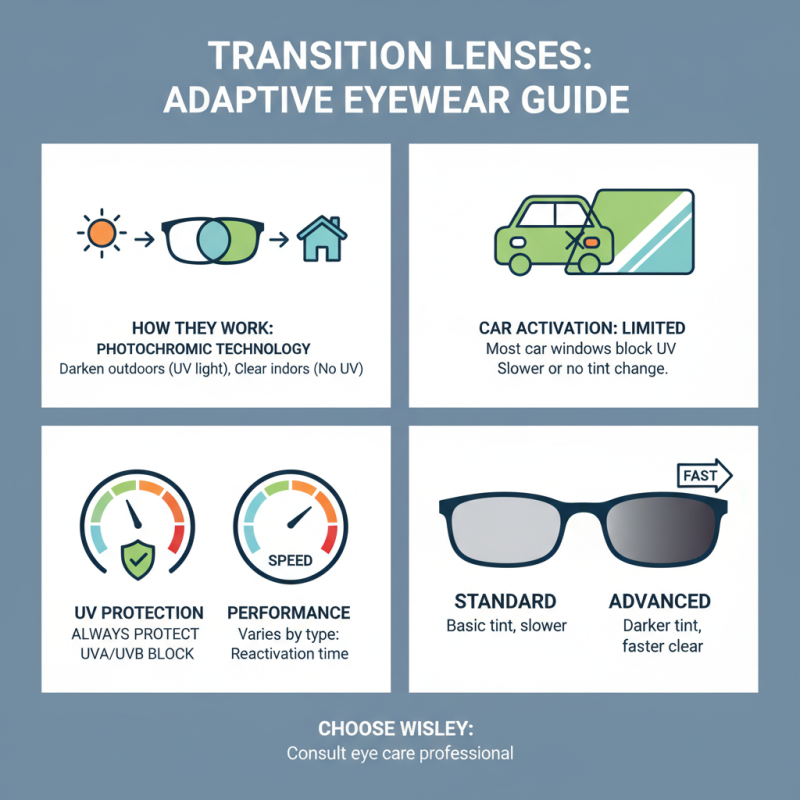
Transition lenses are a blend of convenience and functionality. They adapt to changing light conditions. When exposed to sunlight, they darken quickly. In low light, they return to a clear state. This automatic adjustment provides comfort for wearers. No need to switch glasses constantly.
Understanding how transition lenses work is key. They contain special molecules that react to UV rays. These molecules trigger the darkening process. The level of darkness can vary based on the intensity of sunlight. Some lenses may darken less in certain conditions, which can be frustrating. It’s essential to test them in different environments.
Many people appreciate the benefits of transition lenses. They protect eyes from harmful UV rays and glare. However, some may find them insufficiently dark. Others struggle to see well in car interiors. Each person's needs are different. It's crucial to consider your lifestyle before choosing. Reflecting on these factors can enhance your eyewear experience.
How to Choose Transition Lenses for Your Eyewear Needs?
| Feature |
Description |
Benefits |
| Light Sensitivity |
Transition lenses adjust their tint in response to UV light exposure. |
Provides comfort in varying light conditions and reduces glare. |
| Speed of Transition |
Some lenses transition faster than others when moving from indoor to outdoor settings. |
Quicker adjustments enhance visual comfort. |
| Color Options |
Available in various colors, including gray, brown, and green. |
Color affects perception and can enhance contrast in different environments. |
| Scratch Resistance |
Many transition lenses come with scratch-resistant coatings. |
Durability increases the longevity of the eyewear. |
| UV Protection |
Blocks 100% of harmful UV rays. |
Protects eyes from UV-related damage, including cataracts. |
Key Factors to Consider When Selecting Transition Lenses
When selecting transition lenses, consider your lifestyle. How often are you exposed to sunlight? Those who spend a lot of time outdoors should prioritize high-quality lenses. Look for options that adjust quickly to changing light. However, some may find the transition slow in certain conditions. That’s worth reflecting on.
Lens color is another crucial factor. Gray lenses offer true color perception, while brown enhances contrast. Your preference for color may depend on activities. Do you often engage in sports or driving? Ensure that the lens color complements these activities. Keep in mind that not all transition lenses work equally for everyone. Personal experience can vary, so testing different options may be necessary.
Additionally, consider the lens material. Lightweight materials can enhance comfort. However, durability is also vital. Some materials scratch easily. Balancing comfort and toughness is not a straightforward task. Pay attention to how different materials fit into your daily routine. Think about what matters most—style, comfort, or protection. Each choice reflects a piece of your personality.
How to Choose Transition Lenses for Your Eyewear Needs?
This chart illustrates key factors to consider when selecting transition lenses for eyewear, including their impact on clarity, UV protection, and responsiveness.
Exploring the UV Protection Standards in Transition Lenses
When considering transition lenses, understanding UV protection standards is crucial. Transition lenses darken in sunlight, providing an adaptive solution for varying light conditions. However, not all transition lenses offer the same level of UV protection. According to the American National Standards Institute (ANSI), effective UV protection in eyewear should block 100% of UVA and UVB rays. This is vital for preventing eye damage and maintaining long-term vision health.
Many consumers assume that all lenses provide equal UV protection. This is a misconception. A 2022 report from the Vision Council revealed that only 50% of consumers check if their eyewear meets UV protection standards. This lack of awareness can lead to inadequate protection.
Prioritizing lenses that adhere to established UV standards will ensure your eyes are safeguarded against harmful rays.
Tip: Always look for lenses labeled with UV400 protection. This means they block all light rays with wavelengths up to 400 nanometers.
Additionally, consider the environment where you spend most of your time. If you are frequently outdoors, lenses that transition quickly to UV light are ideal. They provide immediate protection as soon as you step outside. Always consult with an eye care professional to determine the best options based on your lifestyle and needs.
Evaluating Optical Clarity and Comfort in Transition Lens Selection
When selecting transition lenses, optical clarity is a crucial factor. You want lenses that enhance your vision in various lighting conditions. Subpar lenses can create distortion, making it hard to see clearly. Always check for reviews regarding clarity. Consider how different conditions might affect your vision.
Comfort is another key aspect of transition lens selection. If the lenses feel heavy or cause discomfort, you’re less likely to wear them. Ensure the weight and fit match your eyewear needs. A well-fitting frame can alleviate pressure points.
Tips: When trying lenses, focus on their responsiveness to light. Spend time outdoors to evaluate how they adjust. Test them in different environments for the best results. Also, consider your personal style. Lenses should complement your daily life. Sometimes, it's about finding that balance between style and practicality.