How to Choose the Best Polarized Lenses?
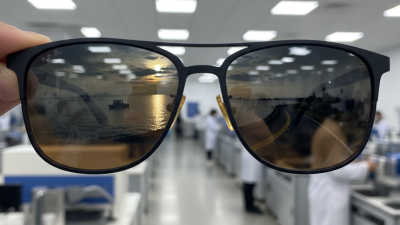
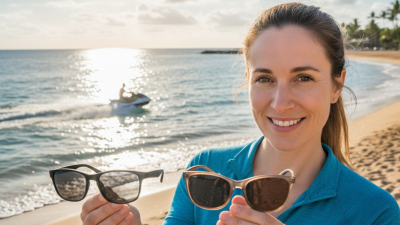
Choosing the best Polarized Lenses begins with understanding how and where you use them. Glare behaves differently on water, snow, roads, and glass buildings. A lens that feels excellent beside a lake may seem too dark while driving through shaded streets. Polarization reduces reflected glare, but it does not automatically guarantee complete ultraviolet protection. Check the product specifications carefully. Look for verified UV protection, suitable optical quality, and a frame that fits securely without pressure.
Practical experience matters. Try the lenses outdoors, not only beneath bright showroom lights. Notice whether road markings remain clear after rain. Check if your phone screen becomes difficult to read at certain angles. A reliable optician can assess your prescription, face shape, and daily visual demands. They can also explain lens materials, tint levels, coatings, and possible color distortion. Brown or amber tints may improve contrast, while gray tints often preserve more natural colors. However, preferences vary. No lens wins everywhere.
Quality claims deserve healthy skepticism. A higher price may reflect better coatings, stronger hinges, or improved manufacturing, but cost alone proves nothing. Read independent testing information when available. Consider how the lenses perform after several hours, when eye fatigue becomes noticeable. Scratches, fingerprints, and poor alignment can quietly reduce comfort. Choosing well means balancing protection, clarity, durability, and realistic use. The perfect pair may not exist. A careful decision still can.
Define Polarization and UV400: Glare Control Is Not UV Protection
How to Choose the Best Polarized Lenses?
Polarized lenses contain a special filter that reduces horizontal glare from water, wet roads, glass, and car hoods. This can make driving, fishing, and outdoor walking more comfortable. However, polarization is mainly about glare control. It does not automatically mean UV protection.
UV400 refers to protection against ultraviolet rays with wavelengths up to 400 nanometers. Reliable UV400 lenses should block both UVA and UVB radiation, even when the lenses look lightly tinted. A dark lens without verified UV protection may feel comfortable while allowing harmful rays through. That detail is easy to overlook. Polarized lenses can also reduce screen visibility, especially on phones or dashboard displays. I have found that tilting the screen often helps, but it is not always convenient.
Tips: Check the product label for clear UV400 or 100% UVA/UVB protection claims. Choose lenses that fit closely without touching your eyelashes. Inspect the view for waviness, color distortion, or uneven tint. For driving, test them against a dashboard display before buying. Polarization helps reduce reflected glare, but it does not replace certified protective eyewear during sports or work. A darker lens is not automatically safer.
Compare CR-39, Polycarbonate, and Trivex Using Impact-Resistance Standards
How to Choose the Best Polarized Lenses?
Polarization reduces reflected glare, but it does not automatically prove impact resistance. Lens material matters. CR-39 offers clear optics and good scratch performance, yet it is generally less resistant to impact than polycarbonate or Trivex. Polycarbonate is lightweight and commonly selected for active use. Trivex also provides strong impact resistance, low weight, and crisp optical performance. Real-world use varies.
When comparing lenses, check whether the complete eyewear passed a recognized impact standard, such as ANSI Z87.1. Basic-impact testing and high-impact testing are different. High-impact testing uses stronger force and stricter evaluation. A lens may look durable but lack the required marking or documentation. Polarization is an added glare-control feature, not a substitute for safety certification. Fit, frame coverage, and lens thickness can also affect protection. I used to rank materials by toughness alone. That was too simple.
Tips: Ask an optician which test level applies to your activity. Look for clear compliance markings on the eyewear, not only the lens description. For cycling, boating, or outdoor work, prioritize high-impact performance and secure coverage. Inspect lenses after drops or deep scratches. Replace damaged eyewear, even when the tint still looks perfect. Thin lenses may feel comfortable, but comfort should not replace verified protection.
Match VLT to Conditions: 8–18% for Bright Sun and 3–8% for Extreme Glare
How to Choose the Best Polarized Lenses?
Polarization cuts reflected glare, but it does not determine darkness. Visible light transmission, or VLT, does that job. For bright sunlight, choose 8–18% VLT. This range matches Category 3 in EN ISO 12312-1, a widely used standard for sunglass filters. It suits open roads, beaches, and ordinary summer conditions. At noon, a pale dashboard may still look sharp, while white pavement feels less harsh.
Extreme glare needs a darker filter. Choose 3–8% VLT for snowfields, glaciers, high-altitude trails, or water under a clear sky. Category 4 filters allow very little visible light and should not be used for driving. The World Health Organization reports that fresh snow can reflect up to 80% of ultraviolet radiation. That reflected brightness can arrive from below, not just above. Polarization helps calm the shimmer, but it cannot replace adequate UV protection.
Check the label carefully. Look for 100% UVA and UVB protection, then match VLT to the scene. A darker lens is not automatically safer. I once preferred a very dark lens on cloudy mountain roads, but detail disappeared in shaded turns. That was a poor choice. Weather changes quickly, and VLT ranges are practical guidance, not personal prescriptions. EN ISO 12312-1 also separates filter categories by light transmission, so the printed category can support a more informed decision.
How to Choose the Best Polarized Lenses?
Visible Light Transmission (VLT) indicates how much light passes through a lens. Higher VLT is suitable for bright sunlight, while lower VLT helps reduce discomfort in extremely bright or reflective conditions.
Verify Optical Quality Through ISO 12312-1 or ANSI Z87.1 Compliance
Choosing the best polarized lenses requires more than checking glare reduction. Optical quality affects comfort, contrast, and visual accuracy during long outdoor use. I look for documented testing against ISO 12312-1 or ANSI Z87.1, depending on the intended activity. These standards address different needs, so the label must match the situation. ISO 12312-1 applies to general-purpose sunglasses and covers optical performance and basic safety requirements. ANSI Z87.1 is designed for occupational eye protection, including impact-related performance.
Do not treat polarization as proof of clear optics. A lens can reduce reflected glare yet show distortion, uneven tint, or small bubbles. Hold the glasses at arm’s length and inspect a straight doorframe through each lens. Move the frame slowly. Warping suggests poor consistency. I once trusted a neat label and ignored slight waviness. After an hour, my eyes felt strained. For stronger verification, request the test standard, date, and product scope from the seller. A credible record should identify the tested lens or finished eyewear.
Fit also matters. Gaps can admit side glare, while loose temples change the viewing angle. Check polarization with an LCD screen, but remember this only confirms filter orientation. It does not verify optical precision or impact performance. Ask for traceable documentation when the use is demanding. Without it, confidence remains an assumption, not evidence. That distinction is easy to miss.
Choose Tint, Coatings, and Frame Fit for Color Accuracy and Full Coverage
Choosing polarized lenses
starts with the light you actually face, not the darkest tint available.
Gray tints preserve natural color and suit driving, water, and bright urban streets.
Brown or amber tints increase contrast, especially around clouds, sand, and uneven pavement.
Yellow tints can brighten dim conditions, but they may distort color more noticeably.
That matters when reading signal lights or judging surface changes.
Test them outdoors.
Look for lenses with dependable UV protection and a coating that resists scratches.
Anti-reflective treatment can reduce distracting reflections from the lens back, particularly under a cap.
Hydrophobic coatings help rain bead away, while oleophobic layers make fingerprints easier to remove.
These finishes improve daily use, but none makes lenses indestructible.
I once chose a heavily mirrored lens and underestimated how quickly its surface showed marks.
That was avoidable.
Frame fit
controls coverage more than many shoppers expect.
The frame should sit close without touching your cheeks or eyelashes.
A slightly curved front can block side glare, while wide temples reduce light entering from the edges.
Check the lower rim during a smile and the bridge during movement.
If the frame slips, polarization cannot compensate for exposed gaps.
Have an optical professional check alignment, lens centering, and fit, especially for prescription lenses.
Color accuracy is personal, and my first choice was not perfect.
Review the tint in shade and sunlight before committing.