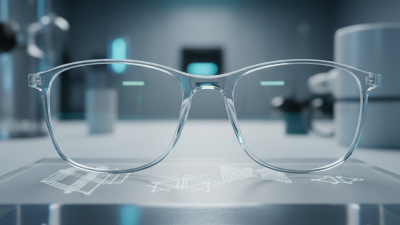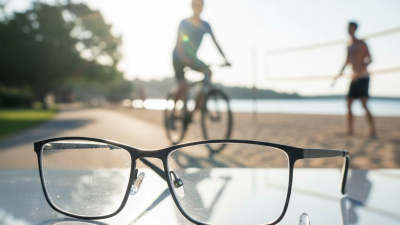

Polycarbonate Lenses are often presented as the practical choice for active lifestyles, children, safety eyewear, and rimless frames. They are lightweight, naturally block most ultraviolet radiation, and resist impact better than standard plastic lenses. That last point matters. The U.S. Food and Drug Administration requires spectacle lenses sold in the United States to meet impact-resistance requirements under 21 CFR 801.410. However, polycarbonate lenses are not unbreakable. Severe force can still damage them.
The World Health Organization’s World Report on Vision estimates that at least 2.2 billion people worldwide have vision impairment. Correct lenses are therefore more than a fashion decision. They affect daily reading, driving, screen use, and workplace safety. In an optician’s consultation, prescription strength, frame design, age, occupation, and outdoor exposure should guide the material choice. Polycarbonate Lenses can be especially useful for children who drop glasses or athletes facing flying objects. They may also reduce lens thickness compared with basic plastic. Yet their lower Abbe value can create noticeable color fringes at the edges of stronger prescriptions. Scratches are another weakness, even with a premium coating.
The Vision Council’s consumer research continues to show that eyewear purchases involve comfort, appearance, protection, and value. Those priorities can conflict. Polycarbonate may be safer, but not always optically superior. This guide examines its benefits, limitations, coatings, pricing, and suitable users. A careful comparison is wiser than a simple “best lens” claim.
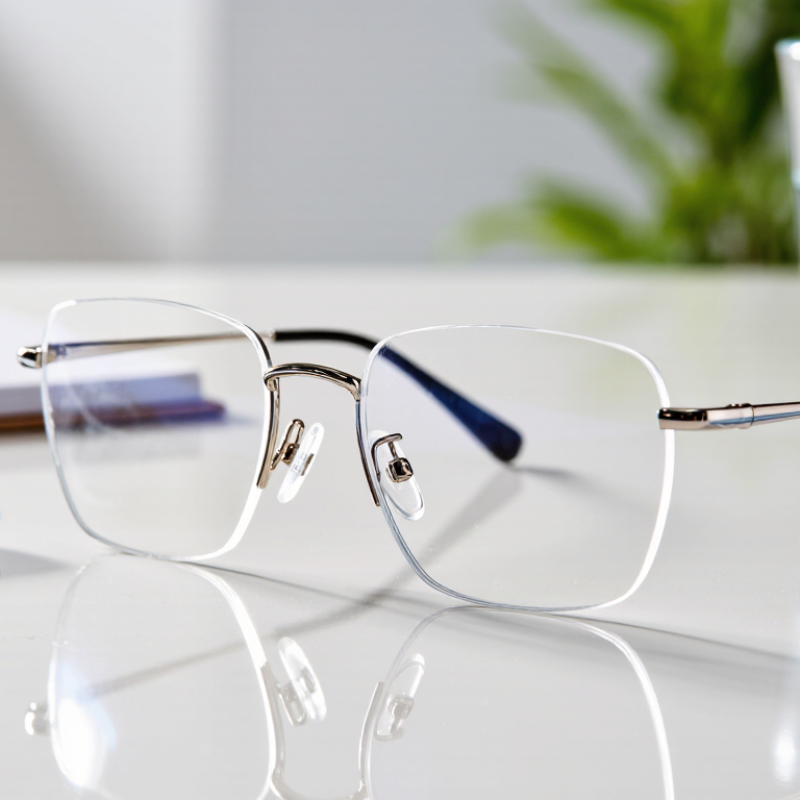
Polycarbonate lenses are made from a tough, lightweight thermoplastic. Their refractive index is about 1.59, according to optical material data published by the Optical Laboratories Association. This allows thinner lenses than standard plastic in many prescriptions. The material also weighs less than glass. That difference is noticeable after several hours, especially with larger frames.
Safety is their strongest feature. The U.S. Food and Drug Administration requires spectacle lenses sold in the United States to meet impact-resistance testing under 21 CFR 801.410. Polycarbonate is widely selected for children, active users, and prescription safety eyewear because it absorbs impact well. It also naturally blocks nearly all ultraviolet radiation below 380 nanometers, according to technical data from the Vision Council’s optical lens resources. The detail matters near water, snow, and bright outdoor surfaces.
Still, polycarbonate is not perfect. Its Abbe value is around 30, so some wearers notice colored edges or mild blur away from the optical center. A scratch-resistant coating is essential, because the material itself scratches more easily than glass. The Vision Council’s 2023 Consumer inSights report indicates that roughly three in four U.S. adults use vision correction. That makes material choice a daily decision, not a minor upgrade. In practice, I value polycarbonate most when impact protection and lighter weight matter more than maximum optical crispness.
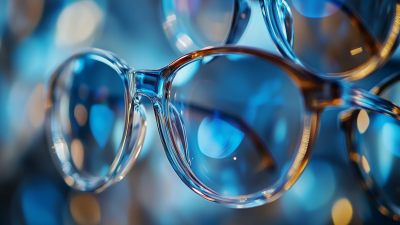
Polycarbonate lenses have a refractive index of about 1.586, allowing them to be thinner than standard plastic lenses with an index of about 1.498. They are also lightweight and highly impact-resistant, making them a practical choice for children, active lifestyles, and safety eyewear. Their main trade-off is a lower Abbe value, which can produce more color fringing at the edges than standard plastic lenses.
Values shown are typical material specifications and may vary slightly by lens design and manufacturer.
Polycarbonate lens production begins with clear resin pellets. Manufacturers dry and melt them, then inject the material into precision molds. Heat and pressure shape the lens blank, including its basic curve and optical center. After cooling, the blank may be cut, edged, and polished for a specific prescription.
The material has a refractive index near 1.586, so it can produce thinner lenses than many basic plastic options. Its tightly bonded polymer structure also resists sudden impact better than standard plastic.
That matters for children, active workers, and people who often drop their glasses. Polycarbonate naturally absorbs much ultraviolet radiation, although the exact protection depends on the formulation and finished lens.
Coatings usually add scratch resistance and reduce surface reflections. They do not make the lens scratch-proof. Polycarbonate also has a lower Abbe value, which can create faint color fringes near the edge of vision, especially in strong prescriptions.
A practical fitting check is important: poor centering can increase discomfort, even when the lens material is strong. “Unbreakable” is an unsafe simplification. Polycarbonate can crack under severe force, and its surface may show wear without proper care.
A soft cleaning cloth and clean water are safer than dry rubbing. The material is useful, but it is not perfect.
Polycarbonate lenses are made from a naturally impact-resistant material. They are thinner and lighter than standard plastic lenses. Their main benefit is everyday protection. In practice, eye-care professionals often recommend them for children, active adults, and people with demanding work routines. A dropped pair is less likely to shatter. They also block nearly all UVA and UVB radiation without requiring a separate treatment. That matters during long hours outdoors. However, UV protection is not the same as complete eye protection. Sunglasses still need suitable coverage and a comfortable fit.
Tips: Ask whether the lenses include a scratch-resistant coating. Polycarbonate can scratch more easily than some alternatives. Check the frame fit, too. A secure frame improves safety during movement. For strong prescriptions, ask about lens thickness and visual clarity. An eye-care professional can assess these details more accurately than an online chart.
Polycarbonate lenses do have compromises. Some wearers notice mild color fringes around high-contrast edges, especially near the lens perimeter. Their surface may also show scratches if cleaned with clothing or rough paper. Careful cleaning helps, but it is not foolproof. For sports, travel, children, or busy daily routines, the durability can justify the choice. For quiet indoor use, another lens material might offer sharper optics. My practical view is cautious: polycarbonate is highly useful, but not automatically best for every prescription or lifestyle.
Polycarbonate lenses are popular because they are lightweight, impact-resistant, and naturally block most ultraviolet radiation. In daily use, they feel comfortable during long commutes, sports, and active work. However, their strengths come with trade-offs. The material is softer than some alternatives, so fine scratches may appear when lenses are cleaned carelessly or stored without protection. A protective coating helps, but it does not make the surface scratch-proof.
Optical clarity can also be a concern. Some wearers notice more chromatic aberration, especially near the lens edges or in higher prescriptions. This may appear as faint color fringes around bright signs or headlights. Careful fitting can reduce discomfort, yet it cannot remove every optical limitation. Polycarbonate lenses may also reflect more visible glare unless an anti-reflective treatment is added. That treatment can improve night viewing, but it may increase maintenance needs and cost.
Fit matters greatly.
In my experience, people sometimes choose polycarbonate lenses only for their strength and overlook visual demands. That is an incomplete decision. A detailed prescription review, accurate measurements, and realistic expectations are essential. For children, active users, or anyone needing strong impact resistance, the compromise may be reasonable. For people prioritizing maximum clarity, another lens material could deserve consideration. I would not treat one option as universally best. Prescription strength, frame design, cleaning habits, and daily environment all change the result.
| Evaluation Dimension | Typical Polycarbonate Lens Data | Potential Benefit | Limitation or Drawback |
|---|---|---|---|
| Refractive index | Approximately 1.586 | Can provide a thinner lens than standard plastic for many moderate prescriptions. | It is not always the thinnest choice for very high prescriptions; lens design and frame size also affect thickness. |
| Abbe value | Approximately 30 | Provides acceptable central vision for many everyday prescriptions. | The relatively low Abbe value can produce more chromatic aberration, such as colored fringes near the edges of vision, especially with stronger prescriptions. |
| Material density | Approximately 1.20 g/cm³ | Generally lighter than glass and slightly lighter than standard CR-39 plastic. | Overall frame weight still depends on prescription strength, lens size, coatings, and frame construction. |
| Impact resistance | Very high impact resistance compared with ordinary glass and standard plastic lenses; availability is commonly tied to applicable safety standards. | A strong option for children, sports, active work, and situations where lens breakage is a concern. | Impact resistance does not make the lens indestructible. Damaged lenses should be replaced, and safety eyewear may still be required for hazardous tasks. |
| Ultraviolet protection | The material typically absorbs most ultraviolet radiation below approximately 380 nm. | Provides built-in UV protection without relying entirely on an added UV coating. | Exact UV performance varies by lens design and manufacturer; product specifications should be checked for the stated wavelength range. |
| Scratch resistance | The base material is relatively soft compared with glass. | A hard coating can significantly improve resistance to everyday surface scratches. | No coating makes the lens scratch-proof. Dry wiping, abrasive cleaners, or rough storage can still damage the surface. |
| Optical clarity | Usually clear for central viewing, with lower dispersion than some older high-index materials but higher dispersion than CR-39 and Trivex. | Suitable for many low-to-moderate prescriptions and safety-focused eyewear. | Peripheral color fringing and edge distortion may be more noticeable for high prescriptions or large frames. |
| Surface reflections | The relatively high refractive index can create noticeable reflections without an anti-reflective treatment. | An anti-reflective coating can reduce glare and improve cosmetic appearance in photographs and video calls. | Coatings add cost and require proper cleaning; they can wear or become damaged over time. |
| Tinting and color options | Can be tinted, mirrored, or treated, depending on the lens process and prescription. | Offers flexibility for sunglasses and outdoor-use applications. | Some tinting methods may be less uniform or less readily available than for other plastic materials. |
| Best-suited users | Children, athletes, active workers, and people who prioritize impact resistance and integrated UV protection. | Offers a practical balance of safety, light weight, and moderate thinness. | Users highly sensitive to optical color fringes or seeking the clearest possible peripheral vision may prefer a higher-Abbe material. |
| Overall value | Often worthwhile when impact resistance, UV absorption, and durability are more important than maximum optical precision. | A sensible choice for safety-oriented and everyday active use. | For low prescriptions, standard plastic may offer better optical clarity; for some high prescriptions, other high-index materials may offer a thinner profile. |
Note: Values are typical material characteristics rather than guarantees for every finished lens. Actual performance depends on prescription, lens geometry, coatings, frame size, manufacturing tolerances, and applicable safety standards.
Polycarbonate lenses are lightweight lenses made from a tough, impact-resistant material. They can suit children, active adults, and people who need extra protection during daily activities. Their lighter weight may also help reduce pressure on the nose and ears. Many polycarbonate lenses include built-in ultraviolet protection, but patients should confirm this with a qualified eye-care professional.
Who should consider polycarbonate lenses? They are a practical choice for children because frames and lenses may face frequent drops, impacts, or rough handling. Cyclists, runners, and outdoor workers may also appreciate their durability. People with strong prescriptions can benefit from their relatively thin profile. However, polycarbonate is not automatically the best option for everyone. Some wearers notice more color fringes at the edges, especially with higher prescriptions. The surface can also scratch without a suitable protective coating. That trade-off is easy to overlook.
Tips: Ask about scratch resistance, UV protection, and lens thickness before ordering. Have your prescription checked accurately. A professional fitting matters, too. Polycarbonate lenses are useful, not flawless. Personal comfort should guide the final decision.