
Leave Your Message
Aspherical Lenses are optical components designed with a gradually changing surface curve, rather than a simple spherical shape. This geometry helps direct light toward a common focal point. The result can be sharper images, reduced distortion, and more compact optical systems.
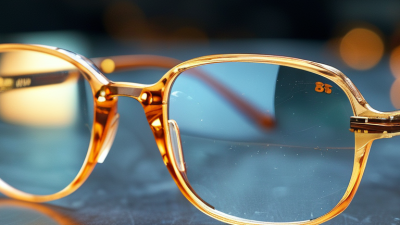
A conventional spherical lens bends light differently near its center and edges. That difference can create spherical aberration, making fine details appear soft, especially around the frame’s outer areas. An aspherical surface corrects this behavior through carefully calculated curvature. In a camera lens, this may improve edge clarity. In eyeglasses, it can support slimmer designs and a wider usable field of view. In laser equipment, precise beam control becomes especially important.
The principle sounds simple.
The manufacturing process is not.
Engineers use optical modeling, precision polishing, molding, and quality inspections to achieve the intended profile. Small surface errors can affect focus, contrast, or light transmission. Therefore, performance depends on more than the lens shape alone. Coatings, alignment, glass type, aperture, and production tolerances also matter. Professional testing often includes interferometry, image-resolution measurements, and distortion analysis.
It is easy to describe aspherical lenses as an automatic upgrade. That would be incomplete. Some designs may show unusual flare, manufacturing variation, or higher costs. Real performance must be judged within the complete optical system. This guide explains how these lenses work, where they are used, and why careful design and reliable testing remain essential.

An aspherical lens is an optical element with a surface that changes curvature from the center toward the edge. A spherical lens keeps one constant radius, like a small glass marble. An aspherical surface is more carefully shaped. Its profile often follows a conic equation with additional polynomial terms. This geometry redirects marginal rays toward the same focal region, reducing spherical aberration. The basic structure may include one aspheric face, two aspheric faces, or an aspheric insert within a compact lens assembly. It can be made from molded glass, precision-polished glass, or optical polymer.
The difference is visible in practice. A flat object viewed through a conventional lens may show soft corners or slight distortion. An aspherical element can improve edge sharpness while reducing the number of elements and overall thickness. A 2024 Grand View Research market analysis estimated the global aspherical lens market at about USD 2.1 billion in 2023, with growth projected at nearly 6% annually through 2030. That demand reflects wider use in imaging, sensing, and compact optical devices. ISO 10110 also requires technical drawings to specify optical surface form and manufacturing tolerances. Tight tolerances matter. Even a well-designed aspheric lens can perform poorly when decentered, scratched, or incorrectly aligned. The shape is advanced, not magical. A small production error may still soften an image near the frame edge.
| Data Dimension | Typical Value or Description | How It Relates to Lens Performance |
|---|---|---|
| Definition | An aspherical lens has at least one optical surface that is not part of a simple sphere. | The changing surface curvature helps control light more precisely than a constant-radius spherical surface. |
| Basic Surface Shape | The curvature gradually changes from the optical center toward the edge. | This geometry can reduce the focusing errors that commonly occur with spherical lenses. |
| Common Conic Representation | A rotationally symmetric asphere is often described using a vertex radius and a conic constant, with additional polynomial terms when required. | These mathematical terms define the surface profile and allow the designer to optimize the lens for a specific optical system. |
| Optical Axis | The central line of rotational symmetry through the lens. | Light traveling close to this axis generally experiences the most symmetric optical behavior. |
| Central Thickness | Commonly ranges from about 1 mm to 10 mm in compact optical components, depending on diameter, material, and design requirements. | Thickness affects mechanical strength, transmission distance, weight, and the position of the principal planes. |
| Clear Aperture | Often approximately 50% to 90% of the outside diameter, depending on the mounting and edge design. | A larger clear aperture allows more light to pass through the useful optical area. |
| Typical Diameter | Approximately 2 mm to 100 mm for many precision optical applications. | Diameter is selected according to the required field of view, beam size, packaging limits, and manufacturing method. |
| Focal Length Range | Can extend from a few millimeters to several hundred millimeters. | Short focal lengths support compact, wide-angle systems, while longer focal lengths provide narrower angular coverage. |
| Primary Aberration Addressed | Spherical aberration is the main error commonly reduced by an aspherical surface. | Rays passing through different zones of a spherical lens can focus at different positions; an asphere can bring them closer to a common focus. |
| Other Aberrations | Depending on the design, aspheres can also help manage coma, astigmatism, field curvature, and distortion. | Correction depends on the complete optical system, not only on the presence of an aspherical surface. |
| Number of Aspherical Surfaces | One or both surfaces may be aspherical. | Using two aspherical surfaces can provide greater design freedom, but it may increase manufacturing and alignment complexity. |
| Lens Materials | Common materials include optical glass, optical polymers, and infrared-transmitting materials such as certain crystals or specialized glasses. | The material determines refractive index, dispersion, transmission range, thermal behavior, durability, and fabrication options. |
| Typical Refractive Index | Approximately 1.45 to 2.00 for many visible-light optical materials. | A higher refractive index can provide stronger optical power with a flatter or more compact surface, although it may increase reflection and dispersion considerations. |
| Light-Bending Principle | Light is refracted at the lens surface according to the change in refractive index and the local surface angle. | Because the surface angle varies continuously across the lens, different ray zones can be directed toward a more accurately controlled image point. |
| Typical Applications | Camera modules, projection systems, laser beam shaping, optical sensors, microscopes, medical imaging, and illumination optics. | Aspherical elements are useful when compact size, high numerical aperture, improved image quality, or efficient beam control is required. |
| Size and Weight Advantage | One aspherical element can sometimes replace multiple spherical elements. | Reducing the number of elements may decrease system length, mass, air-to-glass interfaces, and assembly requirements. |
| Surface Accuracy | Precision optical aspheres may require sub-micrometer form control, depending on wavelength and application. | Surface errors can introduce wavefront distortion, scattering, and unwanted image degradation. |
| Surface Roughness | High-quality polished surfaces are often specified at nanometer-scale roughness levels. | Smoother surfaces reduce scattered light and support higher contrast and transmission efficiency. |
| Reflection Control | Uncoated air-to-glass surfaces typically reflect several percent of incident visible light per surface, depending on refractive index and angle. | Anti-reflection coatings can reduce losses and unwanted reflections across a selected wavelength range. |
| Manufacturing Methods | Precision polishing, molding, diamond turning, and hybrid fabrication are commonly used, depending on material, size, accuracy, and production volume. | The manufacturing method influences achievable tolerances, surface quality, cost, repeatability, and suitable lens materials. |
| Main Design Trade-Off | Aspheres can improve optical performance but generally require more demanding design, fabrication, measurement, and alignment. | The benefits are greatest when the optical system needs correction or compactness that spherical elements cannot provide efficiently. |